
- Details
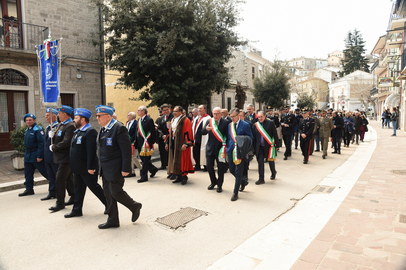
In April 2025, a distinguished delegation of the Order of St George undertook a ceremonial and diplomatic journey to southern Italy, reaffirming the Order’s longstanding mission to honour sacrifice, preserve cultural legacy, and build enduring bonds of friendship across borders.
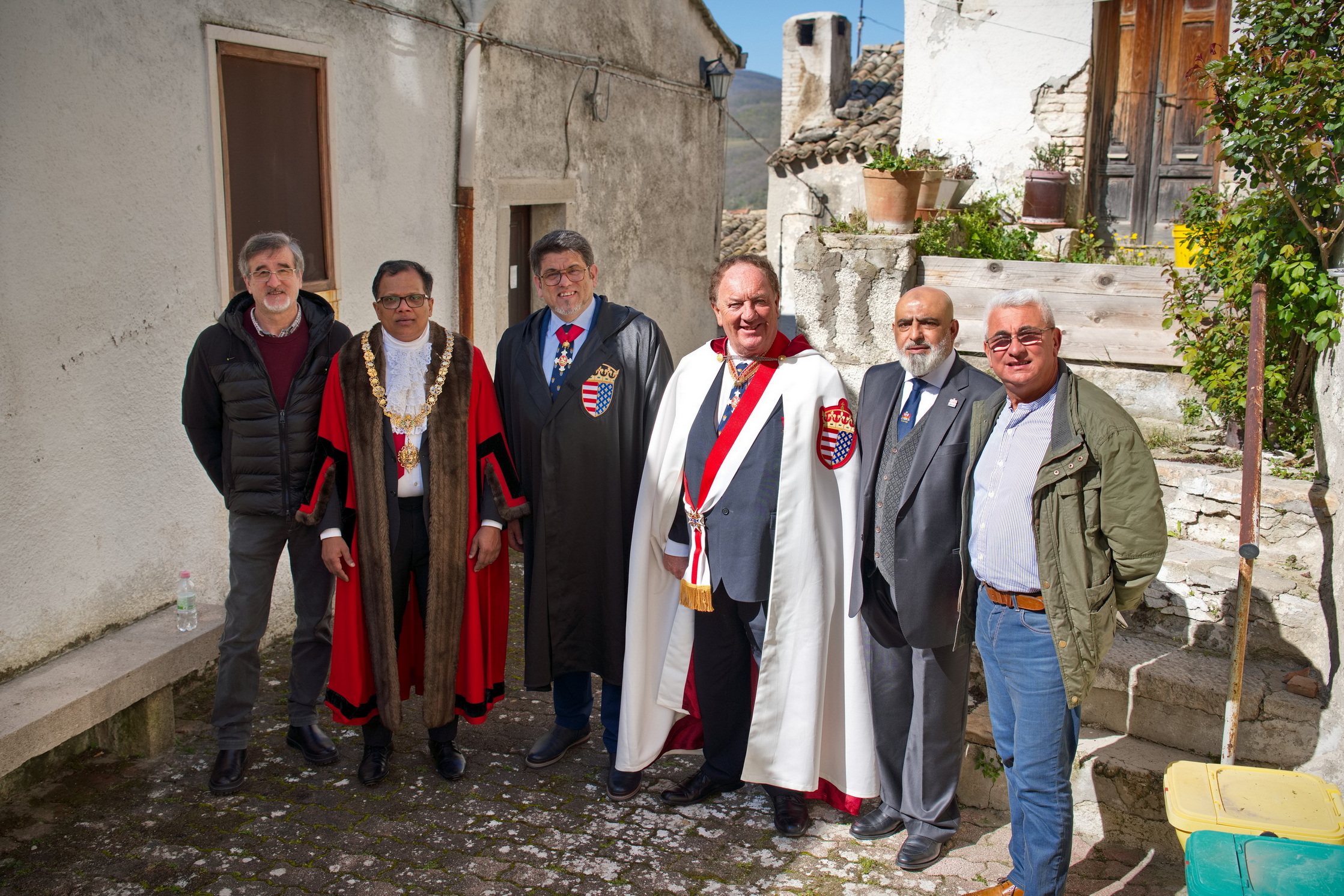
Led by Grand Master Robert Dryden, the delegation included Knight Pietro D’Angelico Falco, native of Castelluccio Valmaggiore in the province of Foggia; Knight Mihail Stoyanov, Chair of the Little Bulgaria Charity; Baiju Thitalla, Mayor of Cambridge; and Abdul-Kayum Arain, Chair of the Cambridge Muslim Trust and friend of the Order. Their visit marked a continuation of the Order’s centuries-old tradition of diplomacy through honour, remembrance, and service.

The visit began with a formal ceremony in Castelluccio Valmaggiore, where the delegation was welcomed by Sir Pasquale Marchese, Mayor of the city and esteemed friend of the Order. In a memorable event attended by 29 Italian mayors, senior military leaders, and over 200 guests, Grand Master Dryden, Mayor Thitalla, and Chaplain Arain were each awarded honorary Italian citizenship. The honour recognised their leadership in charitable and cultural initiatives, including their role in the Cambridge Gateway from India, a landmark that symbolises Cambridge’s commitment to diversity and historical dialogue.


In his address, Grand Master Dryden reminded the audience that remembrance is not only about preserving history, but about recognising shared human values. He paid special tribute to the soldiers of the United Indian Army, whose bravery and sacrifice during World War II contributed to the liberation of Italy and the defence of democratic ideals. The Order also took the opportunity to share further insights about the Freedom Fountain Initiative: the concept proposes an eco‑friendly memorial water feature at in Cambridge that would honour the 4 million soldiers who served inboth World Wars under the United Indian Army — the largest all‑volunteer force in history — to ensure the legacy of these soldiers is remembered and learned from for generations to come.


The ceremony also welcomed the mayors of Celle San Vito and Faeto, two towns known for preserving Franco-Provençal, the ancestral language of King Charles II of Anjou, founder of the Order in 1308. Their presence symbolised a profound historical connection. In recognition of this cultural and linguistic heritage, Grand Master Dryden and The Right Reverend Monsignor Eugene Harkness, Grand Chaplain of the Order and 17th-generation descendant of King Charles II, were formally invited to return to Italy on 10 August 2025 to participate in the anniversary celebrations of King Charles II’s arrival in Italy.


The ceremony concluded with a solemn act of unity, as members of the Italian Army laid flowers at Italy’s war memorials in tribute to the soldiers of the United Indian Army, acknowledging their sacrifices alongside those of Italian fallen heroes. It was a moment that transcended national memory, reinforcing the values the Order has upheld for centuries.


Following the ceremony, the delegation was warmly welcomed by the local people of Castelluccio Valmaggiore, who hosted them with heartfelt hospitality and great pride. The Order was given a tour of the town’s historical and cultural sites, offering a moment of reflection and local connection before the next phase of their journey.


The delegation then travelled across the Puglia region, engaging in formal meetings with the mayors of Andria, Barletta, Trani, Margherita di Savoia, and concluding in Bari.


In Bari, Grand Master Dryden and the Knights were honoured with a private meeting with General Gianluigi Petito, a senior officer of the Italian military. The conversation focused on the role of the United Indian Army during the liberation of Italy and the continued importance of international military remembrance and cooperation.

As the Order of St George prepares to commemorate its 700th anniversary in 2026, this journey to Italy stands as a powerful expression of its enduring mission. Through meaningful ceremony, cultural diplomacy, and ancestral reconnection, the Order continues to unite past and present in the service of honour, remembrance, and international brotherhood.
- Details
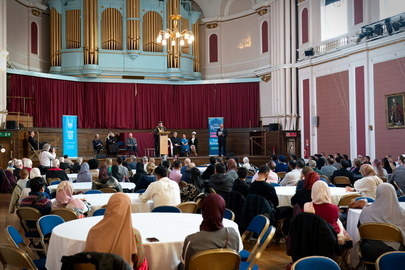
On 24th of March, in the heart of Cambridge, the historic Guildhall was transformed into a vibrant gathering place for unity, dialogue, and cultural celebration. The Community Multi-Cultural Iftar, held under the theme “Share Food, Share Friendship”, brought together people of all faiths and backgrounds to mark the holy month of Ramadan — and to celebrate the strength of community through shared experience.


The event was hosted by Abdul-Kayum Arain, Chair of the Cambridge Muslim Trust, and friend of our Order, whose warm and inclusive leadership set the tone for a truly memorable evening. His thoughtful opening remarks welcomed all guests into a shared space of reflection, hospitality, and hope.
The Order of St George the Martyr was honoured to be invited to this deeply meaningful event.
Our Grand Master, Robert Dryden, was among the featured speakers, addressing the gathering with words that echoed the spirit of harmony and mutual respect that defined the evening.
“This evening is not merely about sharing a meal”, the Grand Master said in his speech. “It is about sharing stories, traditions, and values that connect us as human beings... creating a tapestry of mutual respect and harmony that transcends boundaries of faith, culture, and background”.


The evening’s programme reflected this sentiment through a diverse and thoughtful schedule, beginning with opening remarks from Mayor Baiju Thittala, an interfaith prayer led by Imam Sejad Medic, and a series of talks by religious and civic leaders including Mike Frankl (Beth Shalom Reform Synagogue), The Very Revd Mark Bonney (Dean of Ely Cathedral), and Mrs Jennifer Crompton, His Majesty’s Deputy Lord-Lieutenant of Cambridgeshire.


Table discussions allowed participants to reflect personally and share stories, fostering authentic conversations across lines of difference. At sunset, the fast was broken in the traditional way — with dates and rose sorbet or water — followed by Maghrib prayer and continued fellowship over a shared meal.
Throughout the evening, the Order stood alongside civic, religious, and community leaders in a shared commitment to social harmony, interfaith dialogue, and inclusive charitable action. Representing the Order were not only our Grand Master, but also members actively involved in ongoing multicultural initiatives, including recent support for the Cambridge Memorial Fountain and international outreach efforts.


We were especially heartened to see representatives from organisations like Islamic Relief, the Cambridge Mosque Council, Citizens UK, Anglia Ruskin University, Beth Shalom Reform Synagogue, Mill Road Traders, the Little Bulgaria UK, and many others — all working together in solidarity.
The Iftar was not just an event — it was a reminder of our shared responsibility to build bridges, and of the power of compassion, hospitality, and respect in healing divides and strengthening our communities.
As our Grand Master remarked in his closing words:
“Let us continue to build the bridges that unite us, not only for tonight but for many nights and days to come.”
The Order of St George the Martyr remains committed to this mission — to serve as a bridge between cultures, faiths, and generations, and to support those who work tirelessly for the common good.
We extend our deepest thanks to the organisers, speakers, and every guest who made the evening so memorable. May the spirit of “Share Food, Share Friendship” guide us all in the days ahead.
- Details
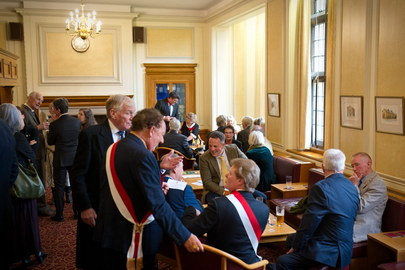
On Sunday the 16th of March, the historic Cambridge Masonic Hall played host to a distinguished gathering as members and guests of the Order of St George the Martyr convened for a celebratory luncheon. The event, rich in camaraderie and tradition, brought together Dames, Knights, and esteemed friends of the Order in a spirit of fellowship, gratitude, and reflection.
The hall, adorned with the iconic banner of the Order, provided a fitting setting for the occasion. Attendees were welcomed with warmth and dignity, as the day unfolded in a relaxed and convivial atmosphere.
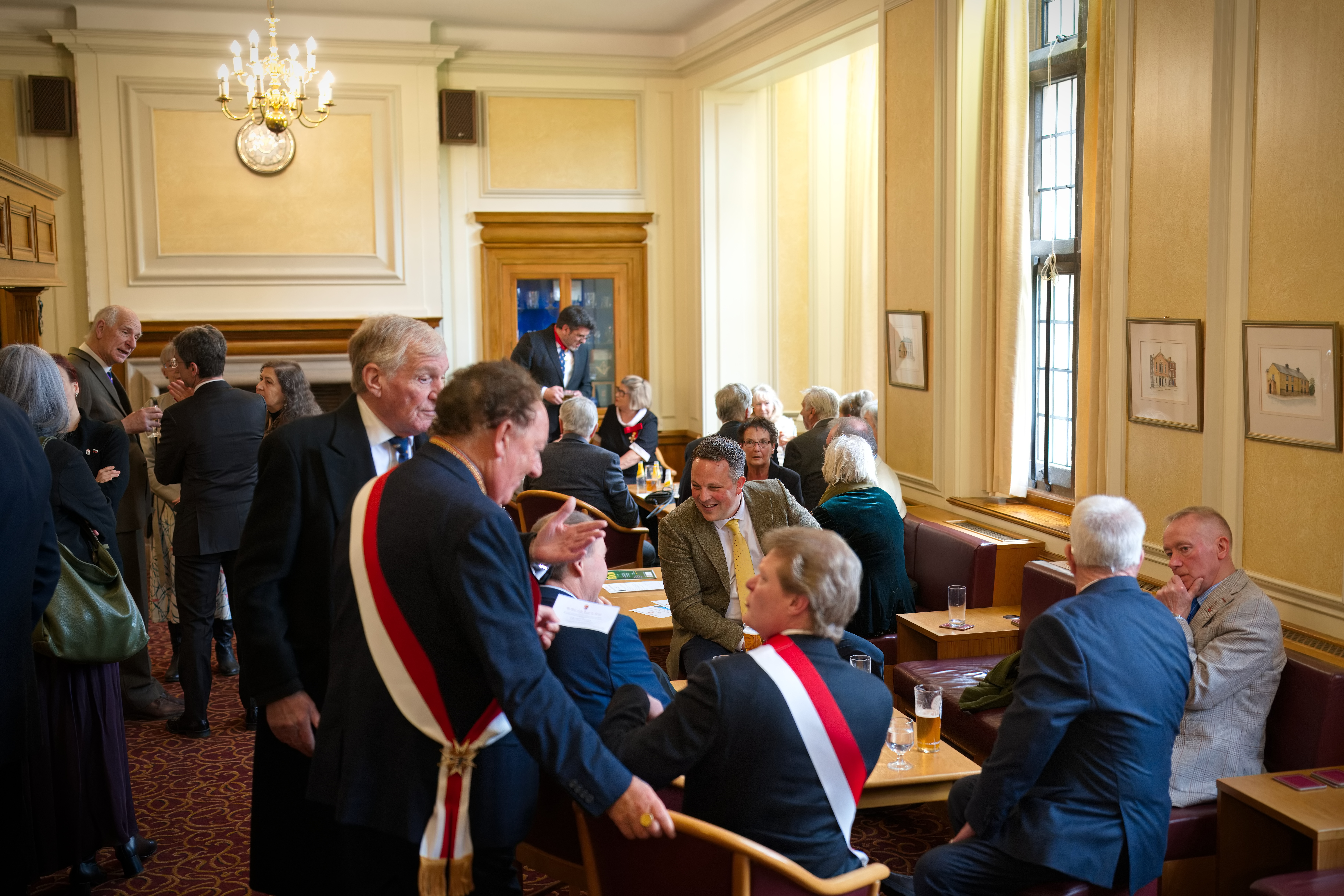

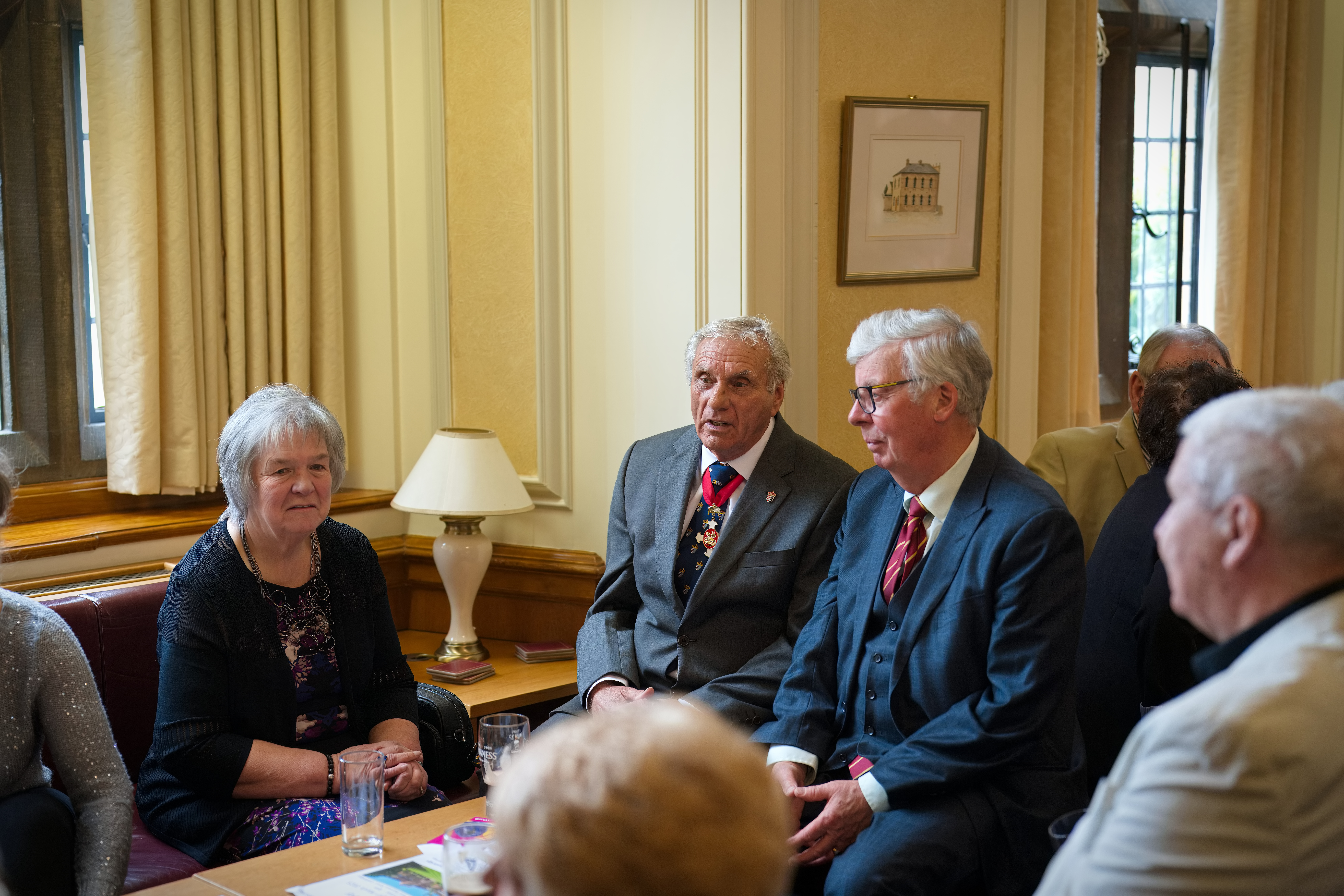


The opening address was delivered by Grand Prior Richard Brown, who welcomed the assembled company and expressed heartfelt thanks to the Freemason’s Hall staff for their hospitality, as well as to the catering team for their efforts in preparing a delightful meal. “We aim to keep today’s event more relaxed,” said Mr. Brown, “so there won’t be too many lengthy speeches. That said, we are honoured to have a special guest with us today — Professor Diego Lazzarich.”


Professor Lazzarich, a renowned historian of political thought from the University of Naples “L’Orientale” and currently a Visiting Professor at Cambridge’s Homerton College, offered a reflection on his academic visit. His recent engagement at Homerton involved a timely and thought-provoking discussion on the history, politics, and importance of gratitude — a theme that resonated deeply with many attendees, given the Order’s own ethos of service and honour.
Following a moment of Grace, guests enjoyed a fine meal in good company, and the conversations that followed were as rich as the fare.


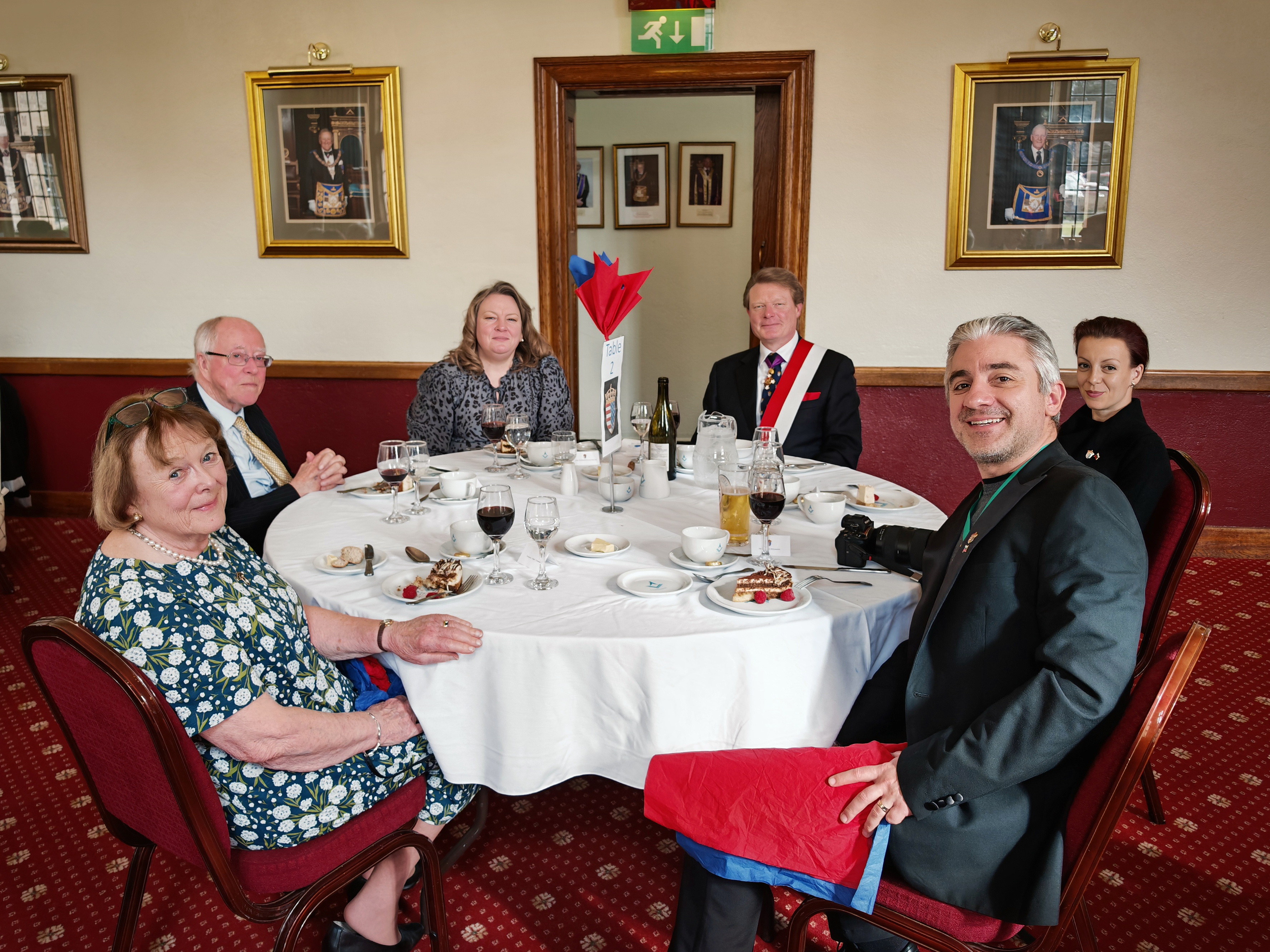
As the luncheon drew to a close, the Grand Master of the Order, Robert Dryden, offered his thanks and closing remarks:
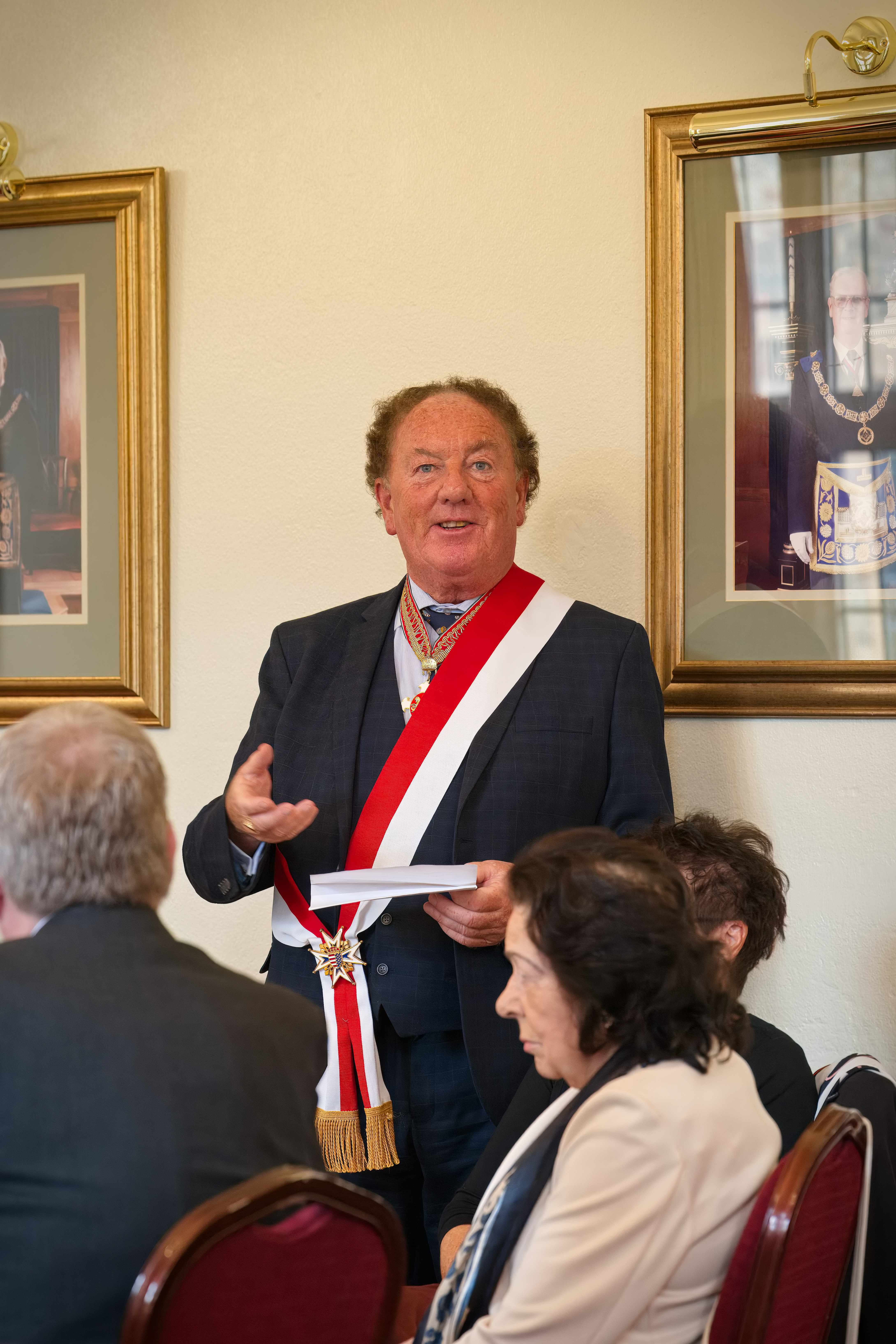
“I hope you’ve all thoroughly enjoyed today’s lunch. It has been a pleasure to share this gathering with you, and I’m delighted to announce that we are planning further social events throughout the year, so there’s much to look forward to”.
Grand Master Dryden also extended personal thanks to Richard, Tony, and Graham for their organizational efforts, and to Mick for ensuring the symbolic presence of the Order’s Flag —an ever-present reminder of the values upheld by its members.
The event concluded with a sense of unity and optimism. In the words of the Grand Master, “On behalf of the Committee of the Order of St. George the Martyr, I wish you all a safe and pleasant journey home”.
It was an afternoon not only of celebration but of reflection, marking yet another memorable chapter in the life of the Order — anchored by tradition, inspired by scholarship, and carried forward by fellowship.
Latest News Articles
September 2025
April 2025
November 2024
- Visiting the Historic Venerable English College
- Honoring the Victims of the Roman Ghetto Tragedy
- Welcomed at the Italian Senate
- Hosted by His Majesty’s Ambassador to the Holy See
- Audience with Pope Francis
- A Historic Pilgrimage to Rome
- Commemoration of Indian Soldiers in WWI and WWII
- Preparing for historic journey to Rome to meet with Pope Francis